Endowment Effect: how to make visitors feel like your product is already theirs
Visitors value what they own. The Endowment Effect explains why free trials, personalization, and "your" copy turn casual signups into loyal users.

Endowment Effect: how to make visitors feel like your product is already theirs
You launched. Signups are happening. But people churn within a week. They never set anything up, never invited a teammate, never made the product their own — so when the trial ended, leaving cost them nothing.
That's the Endowment Effect not pulling its weight. The principle is simple: people value things more once they feel like they own them. If you can get a new visitor to invest even a little — a profile, a preference, a saved item — they'll fight to keep that investment alive.
What the Endowment Effect actually is
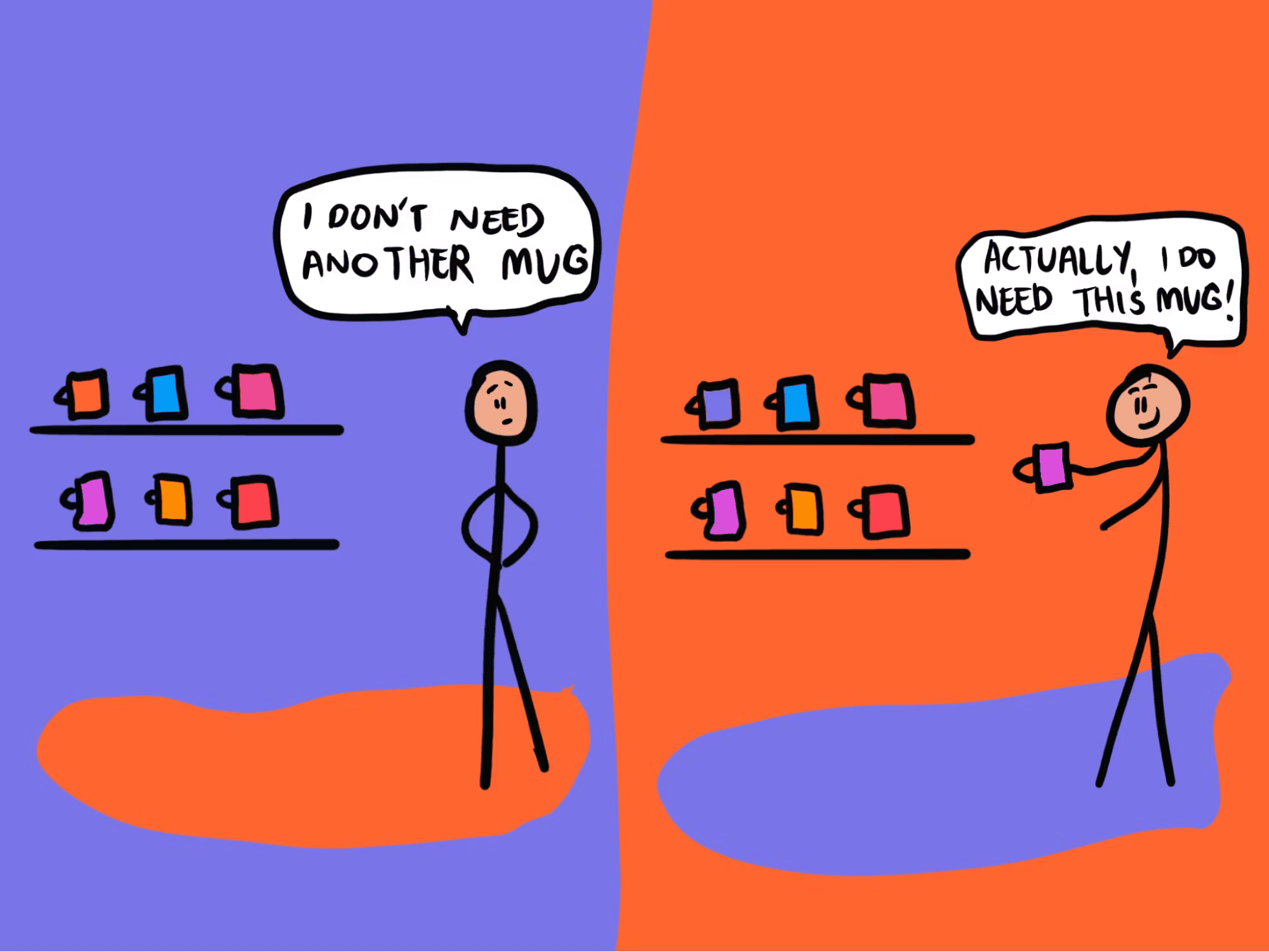
It's the cognitive bias that says we put a higher price on things we already have than on things we don't. Classic experiments by Daniel Kahneman and his team showed people would demand way more money to give up a coffee mug they'd been handed than they'd pay to buy the same mug new.
"We overvalue what we have and undervalue what we don't have." — Daniel Kahneman, Jack Knetsch & Richard Thaler
For a landing page, this principle starts kicking in the moment a visitor signs up. It's the difference between "the company's product" and "my dashboard." That switch is where retention lives.
Why this matters on a landing page
The Endowment Effect doesn't just keep visitors around — it makes them pay.
Conversion (free → paid)
Visitors who've personalized your tool are way more likely to upgrade because they perceive it as "theirs."
Retention
Once a visitor has data, settings, or a profile inside your product, leaving feels like loss. That triggers Loss Aversion — the strongest motivator there is.
Engagement
The more visitors invest, the more reason they have to come back and check on what they built.
Emotional connection
A dashboard that says "Your progress" feels like an extension of the visitor's identity. A dashboard that says "Dashboard" doesn't.
Analyze your conversion triggers
Our AI analyzes your landing page against the same principles used by industry leaders to drive ownership and retention.
Scan Your Site FreeHow to use this on your page and product
The trick: get visitors to invest something — anything — early. Then make that investment visible.
1. Run real free trials
Don't dribble out a "demo." Give visitors the full product for a limited time so they can integrate it into their actual workflow.
- The move: Full features, time-limited.
- Why it works: When the trial ends, visitors aren't choosing whether to buy — they're choosing whether to lose what they built.
- Related: Loss Aversion is the engine that makes this work.
2. Encourage personalization early
The more visitors customize, the more "theirs" the tool feels.
- Do this: Offer theme picks, sidebar arrangement, notification settings during onboarding.
- Avoid this: Forcing a one-size-fits-all setup that gives visitors nothing to invest in.
- Related: Effort Justification — visitors value what they put work into.
3. Use possessive copy
Tiny copy changes, big psychological lift.
- "Your dashboard," not "Dashboard."
- "Your library," not "Library."
- "Your progress," not "Progress."
4. Show what visitors have built
If your product accumulates anything — files, badges, saved items, scans — make the collection visible.
- The move: Progress bars, "Recent activity," achievements, libraries.
- Why it works: Seeing the pile makes walking away from it feel real.
Common ways builders break this
1. The "hostage" mistake
- The problem: Making it hard to export data or cancel a trial.
- The fix: Real ownership comes from value, not from cages. Visitors should want to stay, not have to.
2. Asking for too much, too early
- The problem: A 10-step onboarding before visitors have seen any value.
- The fix: Progressive disclosure. Let them invest something tiny first (a profile name, a preference) before asking for big effort.
3. False ownership
- The problem: Letting visitors set things up, then quietly nuking it when their plan lapses.
- The fix: Be honest about what survives a downgrade and what doesn't. Surprise data loss is the fastest way to permanent churn.
How real products use this
Audible
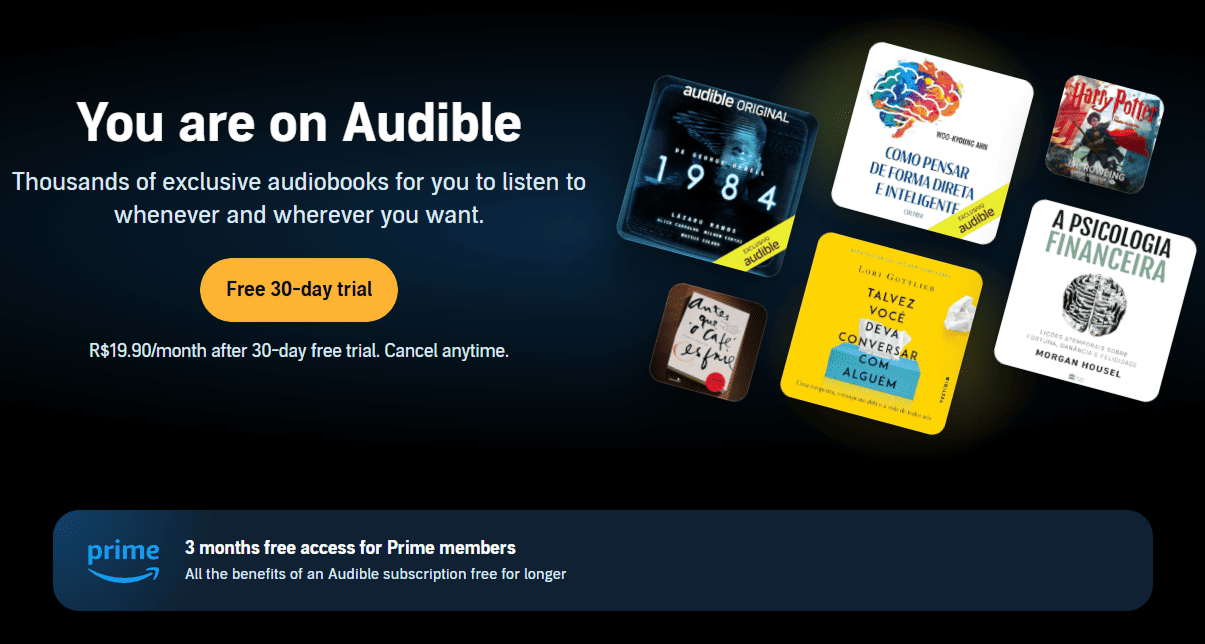
Audible's whole model is built on Endowment Effect. You buy "credits," you turn them into books, the books live in your library. Even after canceling, you usually keep what you bought. Add badges and "listening level" achievements on top, and visitors aren't just subscribed — they're attached.
See how your site compares
Our AI analyzes your landing page against the same principles used by Audible and other industry leaders.
Get Your Free UX ScoreRelated principles
The Endowment Effect plays well with:
Loss Aversion
Why naming what visitors lose by leaving moves more action than promising what they gain.
Resources & further reading
Why do we value items more if they belong to us?
A deep dive by The Decision Lab into the experimental history of the endowment effect.
Nudge: Improving Decisions About Health, Wealth, and Happiness
The seminal book by Thaler and Sunstein that discusses how the Endowment Effect influences daily economic choices.
Frequently asked questions
Don't guess your UX. Scan it.
Upload your screens or paste your URL to get a senior-level review in under 3 minutes.
Start Free ScanRelated Articles
Sunk Cost Fallacy: Why visitors stay with broken tools — and how to free them
Visitors stay with bad products because they already invested time. Here is how to design a landing page that turns sunk cost into a reason to switch.
Anchoring Bias: Why the first number on your landing page changes how visitors judge every other number
Visitors do not evaluate your price in a vacuum. Whatever number they see first becomes the yardstick. Here is how to set anchors that make your offer feel like a steal.
Attention Bias: Why visitors look right past your best feature on your landing page
Visitors do not scan your page evenly. They hunt for the one thing they care about and ignore everything else. Here is how to put it where their eyes already are.