Bandwagon Effect: Why your landing page needs to show that other people already use you
Visitors do not want to be the first one. Show them they are not, and you remove half the hesitation. Here is how to use the bandwagon effect without faking it.
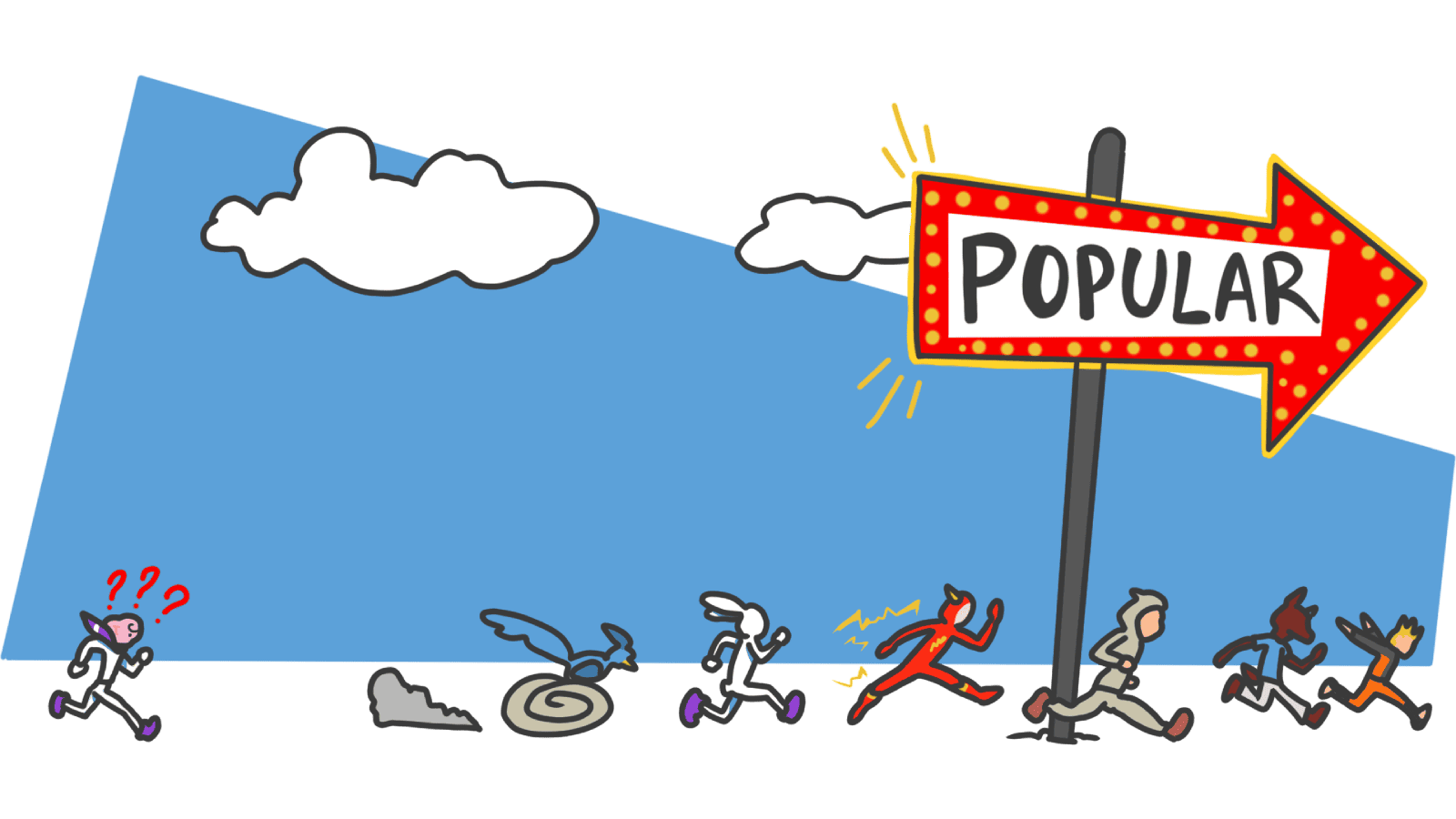
Bandwagon Effect: Why your landing page needs to show that other people already use you
You launched. You sent the page to your network. A few signed up. You start sending paid traffic and the conversion rate is bad.
Cold visitors don't behave like your friends. They land on your page and the first question their brain asks is: "Is anyone else doing this?" If the answer isn't obviously yes, they leave. Not because your product is bad — because being the first to try something unknown is uncomfortable.
That's the bandwagon effect, and it's why "Join 5,000 builders" outperforms a clever tagline almost every time.
What the bandwagon effect actually is
People copy other people. We pick the busy restaurant over the empty one. We grab the bestseller. We trust the app with 50,000 reviews more than the one with three. The more people are already doing it, the safer it feels to join.
"We are all naturally susceptible to the power of social norms." — Dan Ariely
Two reasons drive this:
- We assume the crowd knows something we don't. If thousands of people use a tool, it must work — otherwise word would have spread.
- We don't want to feel left out. Picking what others picked is socially safer than picking the weird one.
For your landing page, this means visitors aren't grading your features. They're checking if it's safe to be in your group.
Why this matters on a landing page
Used right, the bandwagon effect turns a static sales pitch into a "look, you're not alone here" signal that lowers the bar to act.
Less analysis paralysis
Visitors don't want to spend an hour comparing tools. If your page shows "10,000 founders use this," their brain takes the shortcut: "good enough, I'll try it."
Instant credibility for cold traffic
Strangers don't know you. They know nothing about your team, your roadmap, or your bug count. A real number — users, signups, customers — borrows credibility from people they don't know either, but who already said yes.
Higher conversion at the moment of friction
The closer to the signup or checkout you place social proof, the more it lifts conversion. The moment a visitor hesitates is when they need to know other people have already done what you're asking them to do.
Analyze your conversion triggers
See which persuasion techniques your site is missing and get an instant analysis of your interface against 80+ UX principles.
Scan Your Site FreeHow to use the bandwagon effect on your page
You can't just say "lots of people love us." You have to show it, with real numbers and real faces.
1. Use specific, real numbers
Round numbers feel made up. Specific ones feel real.
- Examples: "1,247 founders signed up this month." "98% retention after 90 days." "Join 12,403 builders."
- Do this: Ship live counters or auto-updated stats whenever you can.
- Avoid: "Used by thousands" with no number. "Trusted by millions" when you have 600 users.
2. Mark the popular choice
If you have multiple plans, products, or paths, label the one most people pick. Visitors hate guessing.
- Implementation: "Most popular," "Trending," or "Pick of the week" badges.
- Visual move: Make the popular plan slightly bigger or in a different color. This pairs well with Social Validation.
3. Stack the review count, not just the stars
A 4.8-star rating is good. A 4.8-star rating from 12,000 reviews is undeniable. Quantity matters more than score.
- Do this: Put the count of reviews near your CTA, not buried at the bottom.
- Bonus: Group testimonials by visitor type. "Loved by indie hackers" lands better with a Lovable user than generic praise.
4. Show the waitlist if you have one
Pre-launch or beta? A waitlist works double-duty: it shows demand and creates a small layer of exclusivity.
- Implementation: "Join 4,200 others on the waitlist."
- Pairs with: Scarcity Heuristic, since limited access feels valuable.
Common ways builders break this
Faking the numbers
- The mistake: Inflated review counts. Fake "John just signed up from Ohio" notifications. A signup count that adds three users every time you refresh.
- The fix: Use real data only. One screenshot on Twitter showing your fake notifications and your reputation is gone for good.
Showing low numbers too early
- The mistake: "0 reviews." "Be the first to sign up." "Join our community of 8 people."
- The fix: If your numbers aren't impressive yet, don't show them. Use a different signal — a founder story, a specific problem you solve, an early customer's quote.
Slapping "popular" on everything
- The mistake: Every plan is "Most Popular." Every feature is "Trending." Every product is "Best Seller."
- The fix: If everything is popular, nothing is. Pick one and let it carry the weight.
How real products use this
Amazon
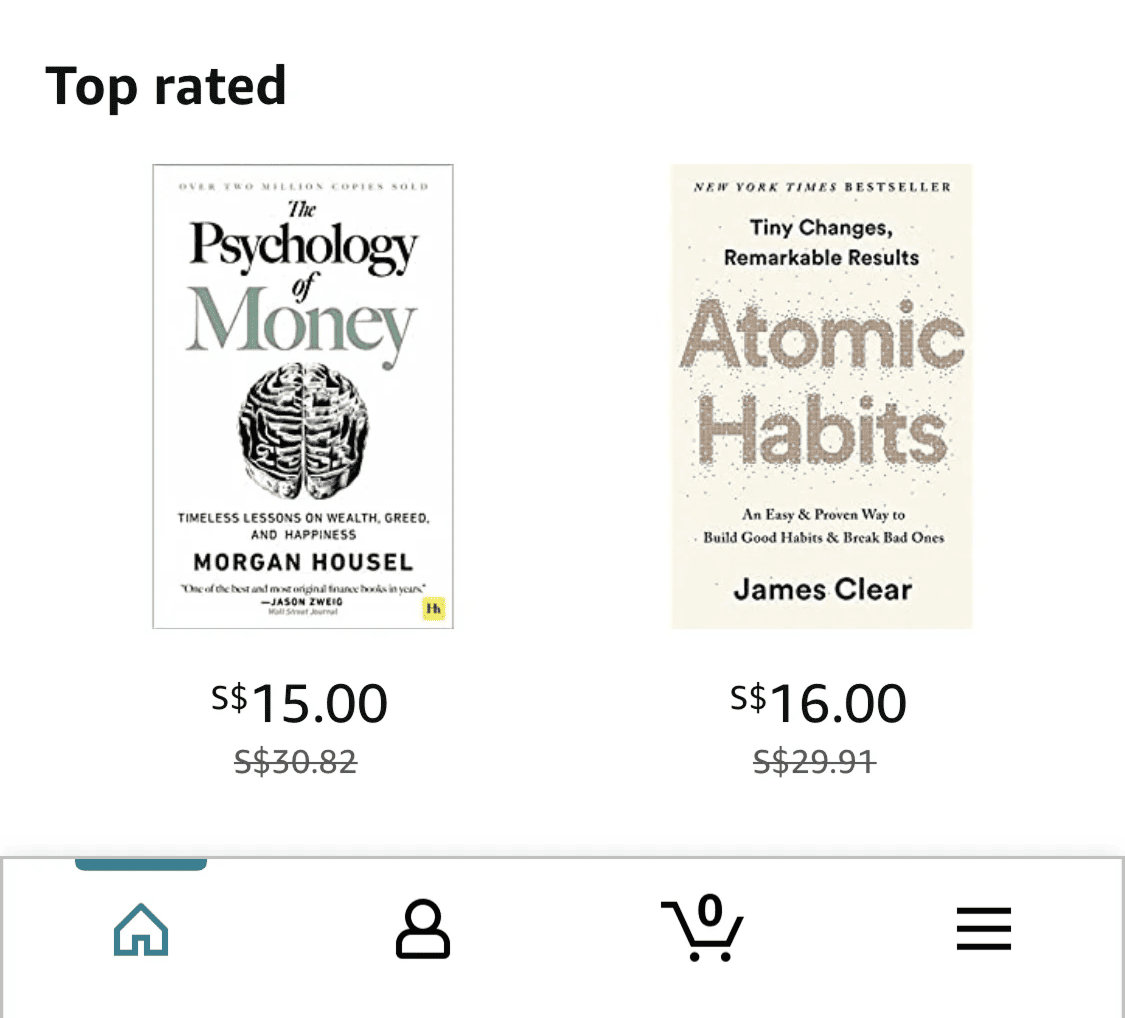
"Best Seller," "#1 in category," "50,000+ ratings." Amazon doesn't just filter products — they pull your eye toward whatever the crowd already picked. You can spend an hour comparing or just buy what 50,000 people already bought. Most people pick the shortcut.
Spotify

"Global Top 50." "Viral 50." Spotify makes it easy to listen to whatever everyone else is listening to. You don't even need to like a song — you just want to know what the rest of the world is hearing. Discovery becomes about belonging.
See how your site compares
Our AI analyzes your interface against the same principles used by Amazon and Spotify.
Get Your Free UX ScoreRelated principles
The bandwagon effect rarely flies alone. These build on it:
Social Proof
The wider pattern behind why what other people do shapes what visitors do next.
Scarcity Heuristic
Why visitors move faster when something feels limited or about to disappear.
Resources & Further Reading
Influence: The Psychology of Persuasion
Robert Cialdini's seminal book on the six pillars of influence, including social proof.
The Bandwagon Effect - The Decision Lab
A deep dive into the psychological mechanisms and history of the bandwagon bias.
Frequently Asked Questions
Don't Guess Your UX. Scan It.
Upload your screens or paste your URL to get expert-level UX analysis in under 3 minutes.
Start Free ScanRelated Articles
Authority Bias: Why your landing page looks sketchy to strangers (and what to fix first)
New visitors do not trust you yet. They scan for proof you are not a scam. Authority Bias is how you signal you are real before they read a single word.
Social Proof: why your landing page looks sketchy without it (and how to fix it)
Strangers don't trust your claims — they trust other strangers. Social Proof shows you exactly which trust signals turn skeptical visitors into signups.
Anchoring Bias: Why the first number on your landing page changes how visitors judge every other number
Visitors do not evaluate your price in a vacuum. Whatever number they see first becomes the yardstick. Here is how to set anchors that make your offer feel like a steal.