The Endowment Effect in UX: Why Ownership Drives Higher Retention
Discover how the Endowment Effect influences user behavior. Learn to use free trials and personalization to create a sense of ownership and boost UX conversion.

The Endowment Effect in UX: How Creating Ownership Drives User Loyalty
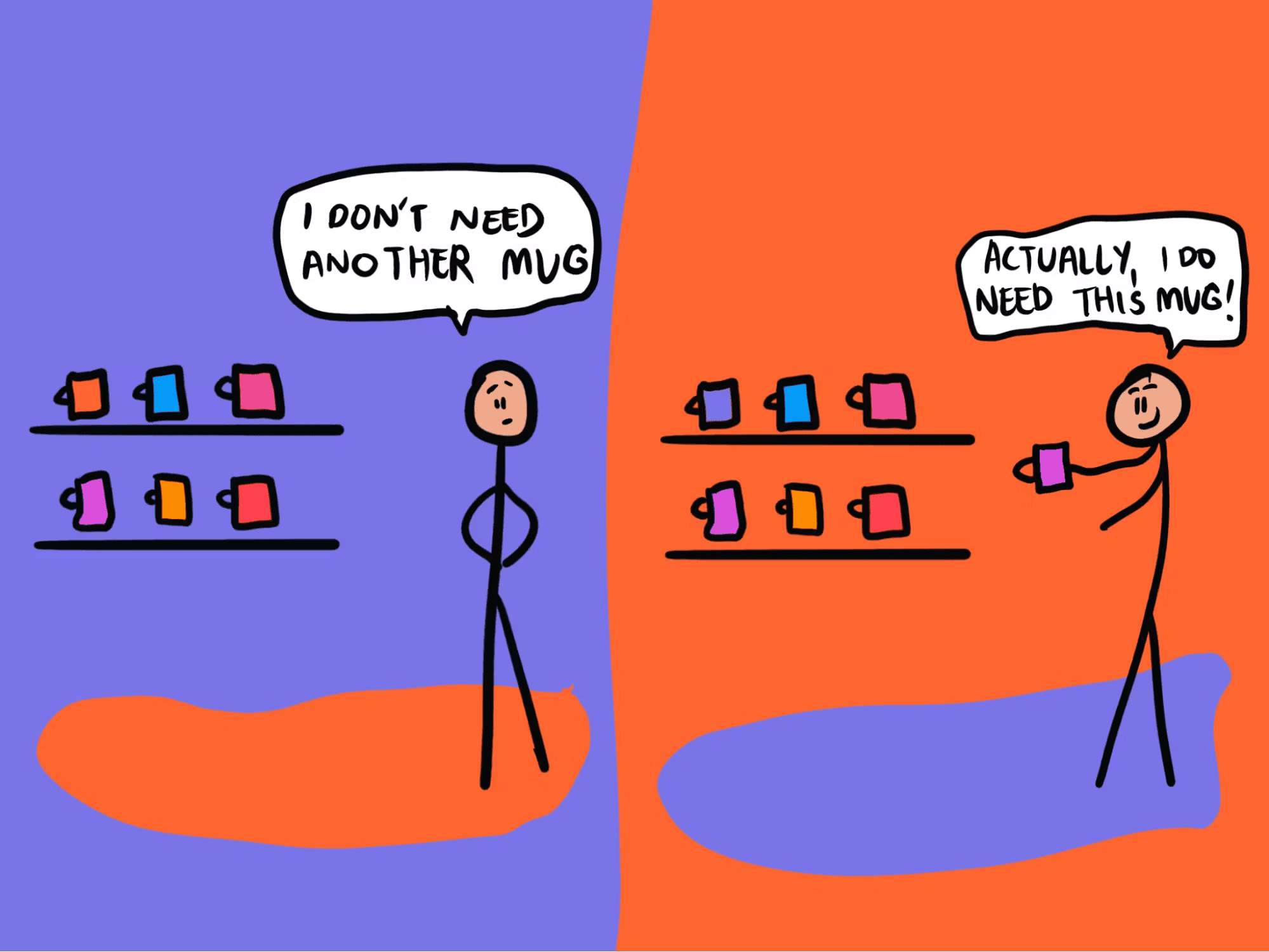
Have you ever wondered why you’re so much more reluctant to cancel a subscription after a 30-day free trial than you were to sign up for it in the first place? Or why that free, slightly chipped coffee mug you got at a tech conference feels significantly more valuable than the pristine ones sitting on the store shelf?
This isn't just sentimentality; it’s a powerful cognitive bias known as the Endowment Effect. In the world of User Experience (UX) and product design, understanding this psychological trigger is the difference between a user who "just visits" and a user who "belongs." When a user feels they own a part of your product, the perceived value of that product skyrockets, making them far less likely to churn.
What Is the Endowment Effect?
The Endowment Effect is a psychological phenomenon where individuals attribute a higher value to things merely because they own them. In classical economics, an object should have a fixed market value regardless of who holds it. However, behavioral psychology shows that once we "possess" something, our internal valuation of it increases significantly.
The concept was famously explored by Nobel laureate Daniel Kahneman and his colleagues. They found that people would demand much more money to give up an object (like a mug) than they would be willing to pay to acquire the exact same object if they didn't already own it.
"We overvalue what we have and undervalue what we don't have." — Daniel Kahneman, Jack Knetsch & Richard Thaler
In a digital context, the Endowment Effect is about the psychological transition from "the company's software" to "my account." This transition is fueled by the time, effort, and personalization a user invests in the platform.
Why the Endowment Effect Matters for Digital Products
In the competitive landscape of SaaS, e-commerce, and mobile apps, the Endowment Effect is a primary driver of Customer Lifetime Value (CLV) and retention. Here is why it is essential for your UX strategy:
- Reduces Churn via Loss Aversion: Once a user feels they "own" their data, their curated playlists, or their custom settings, leaving your platform feels like losing a possession. This triggers Loss Aversion, which is a much stronger motivator than the potential gain of a competitor's features.
- Increases Willingness to Pay: Users who have spent time personalizing a tool are more likely to convert from a free to a paid tier because they perceive the tool as more valuable to their specific workflow.
- Builds Emotional Connection: Possession is closely linked to identity. When a dashboard displays "Your Progress," the user sees a reflection of their own achievements, creating a sticky emotional bond with the interface.
- Boosts Engagement: The more a user "endows" the product with their information and preferences, the more reason they have to return to manage their "collection."
Analyze your conversion triggers
Our AI analyzes your interface against the same principles used by industry leaders to drive ownership and retention.
Scan Your Site FreeHow to Implement the Endowment Effect in UX
To leverage this bias effectively, your design must move beyond being a passive tool and become a canvas for the user’s identity and effort.
1. Offer Strategic Free Trials
Allowing users to use the full version of a product for a limited time is the most direct application of the Endowment Effect. During the trial, the user begins to integrate the tool into their daily routine.
- The UX move: Don't just give them a "demo." Give them the "full experience."
- Why it works: When the trial ends, you aren't just asking them to buy a subscription; you are asking them to pay to avoid the pain of losing access to a tool they now "own."
- Related concept: See how Loss Aversion: The pain of losing hurts more reinforces this strategy.
2. Encourage Deep Personalization
The more a user can customize the interface, the more they will feel that it is "theirs." This increases the perceived value because the product is now unique to them.
- ✅ Do this: Allow users to choose their theme, organize their sidebar, or set custom notification rules early in the onboarding.
- ❌ Avoid this: Forcing a "one-size-fits-all" layout that prevents users from making the space their own.
- Related concept: See Effort Justification: The value of effort invested.
3. Use Possessive and Personalized Language
Small changes in copy can have massive psychological impacts. By shifting from neutral language to possessive language, you reinforce the feeling of ownership.
- Instead of "The Dashboard," use "Your Dashboard."
- Instead of "Library," use "Your Library."
- Instead of "Overall Progress," use "Your Progress."
4. Visualize the User's "Collection"
If your product involves accumulating items (files, saved articles, badges, or data points), make that collection highly visible.
- The UX move: Use progress bars, "Recent Items" galleries, or "Achievements" folders.
- The fix: When a user sees a visual representation of what they have "accumulated" within the product, the idea of walking away and losing that collection becomes much less desirable.
Common Endowment Effect Mistakes to Avoid
While powerful, misapplying this bias can lead to "Dark Patterns" that frustrate users and damage brand trust.
1. The "Hostage" Situation
- The problem: Making it impossible for users to export their own data or cancel a trial.
- The fix: Possession should come from real value and personalization, not from artificial barriers. Ensure users feel they own their data, not that your product owns them.
2. Overwhelming Onboarding
- The problem: Asking for too much personalization (effort) too early.
- The fix: Use "progressive disclosure." Let users own small things first (like a profile picture) before asking them to invest heavy effort into complex configurations.
3. False Sense of Ownership
- The problem: Telling a user they "own" something that can be taken away without notice or logic.
- The fix: Be transparent about trial periods and what happens to user data if a subscription lapses. Trust is the foundation of ownership.
Real-World Examples: The Endowment Effect in Action
Audible

Audible is a masterclass in the Endowment Effect. By giving users "credits" that they use to "buy" books, the books become part of a permanent personal library. Even if a user cancels their subscription, they often keep access to the books they "purchased" with credits. This creates a massive sense of ownership. Furthermore, by tracking "Listening Level" (Newbie, Pro, Scholar) and badges, Audible turns time spent into a "collection" of achievements that the user would be loath to lose.
See how your site compares
Our AI analyzes your interface against the same principles used by Audible and other industry leaders.
Get Your Free UX ScoreRelated UX Principles
Understanding the Endowment Effect is even more powerful when combined with these related psychological concepts:
Loss Aversion
Learn why the fear of losing what we have is twice as powerful as the joy of gaining something new.
Resources & Further Reading
Why do we value items more if they belong to us?
A deep dive by The Decision Lab into the experimental history of the endowment effect.
Nudge: Improving Decisions About Health, Wealth, and Happiness
The seminal book by Thaler and Sunstein that discusses how the Endowment Effect influences daily economic choices.
Frequently Asked Questions
Don't Guess Your UX. Scan It.
Upload your screens or paste your URL to get expert-level UX analysis in under 3 minutes.
Start Free ScanRelated Articles
Sunk Cost Fallacy in UX: How to Help Users Make Better Decisions
Understand the Sunk Cost Fallacy in UX design. Learn how this cognitive bias affects user behavior and how to design interfaces that drive rational decisions.
Anchoring Bias in UX: How First Impressions Shape Value Perception
Master the anchoring bias in UX design. Learn how to use initial information to guide user perception of price, value, and task complexity for higher conversions.
Authority Bias in UX: Using the Voice of Authority to Drive Conversion
Learn how Authority Bias influences user behavior. Discover how to use expert endorsements, credentials, and trust signals to increase conversions and credibility.