Landing page review

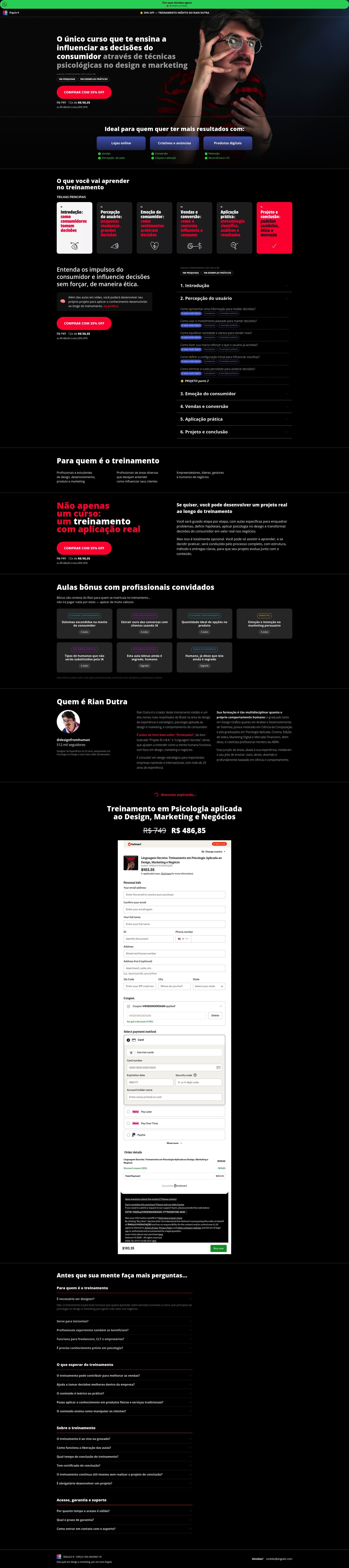
Curso Rian Dutra (designfromhuman) uses visual authority to sell psychological mastery.

By leaning into a premium dark aesthetic and massive social proof, Curso Rian Dutra (designfromhuman) frames consumer psychology as an elite competitive advantage.

Curso Rian Dutra (designfromhuman)angulor.comReviewed May 1, 2026
0/100
Excellent

Elite visual execution and instructor authority, held back by a high-friction checkout and the absence of student testimonials at the moment of decision.

Score from a full UX Scan review.

Design and UX93
Psychology90
Copy88

The first fold

What Curso Rian Dutra (designfromhuman)'s visitors see before they scroll.

View full page
Curso Rian Dutra (designfromhuman) landing page hero screenshot

The short version

  1. Curso Rian Dutra (designfromhuman) masters the Halo Effect through a high-end dark UI that makes the content feel expensive.

  2. Authority signals like the 512k follower count and best-seller status do the heavy lifting for trust before the user even reads a module title.

  3. The checkout process introduces a sudden spike in friction that threatens to derail the high-intent momentum built by the rest of the page.

  4. Despite all the instructor authority, there are no visible student testimonials, leaving the strongest social proof lever untouched right where conversion happens.

Curso Rian Dutra (designfromhuman) presents a masterclass in positioning. The page moves beyond selling a simple course on psychology, instead offering the Secret Languages of influence. By using a deep, dark palette punctuated by aggressive red accents, the design signals that you are entering a space of professional secrets and high-stakes strategy. It is a textbook example of how visual branding can elevate a digital product from a commodity to a premium experience.

The editorial tension here lies between the smooth persuasion of the upper page and the sudden, bureaucratic wall of the checkout form. Everything from the hero section to the curriculum breakdown is designed to reduce friction and build desire. However, once the visitor is ready to commit, they are met with a long, data-heavy form that feels more like a tax audit than a gateway to mastery. It is a rare moment of misalignment in an otherwise polished funnel.

The other glaring gap is voice: for a page about influencing people, it is striking that no past student gets to speak. The instructor's authority is everywhere, but peer proof, the kind of testimonial that lets a hesitant buyer see themselves in someone who already took the leap, is absent. Together with the heavy checkout, this is the single most expensive missing piece on the page.

The first 5 seconds

Within seconds, the page establishes Rian Dutra as a singular authority in the intersection of design and psychology. The primary message is clear: this is the only place to learn how to influence consumer decisions through specific psychological techniques. The high-quality photography and bold typography immediately signal a premium offering. While the value proposition is unmistakable, the sheer length of the page and the detailed curriculum suggest a significant time commitment, which might give casual browsers pause before they reach the first CTA.

What Curso Rian Dutra (designfromhuman) nailed

Visual hierarchy that guides the eye

The use of the 60-30-10 color rule is executed perfectly here. The dark background provides a sophisticated canvas, while the vibrant red accents act as a visual lighthouse, pulling the eye toward the most important conversion points. It is a clean, intentional use of color that ensures the visitor never feels lost in the long-form content.

Balanced color use (60-30-10)

UX heuristic

Balanced color use (60-30-10)

A simple split that makes any palette balanced.
Authority signals that kill skepticism

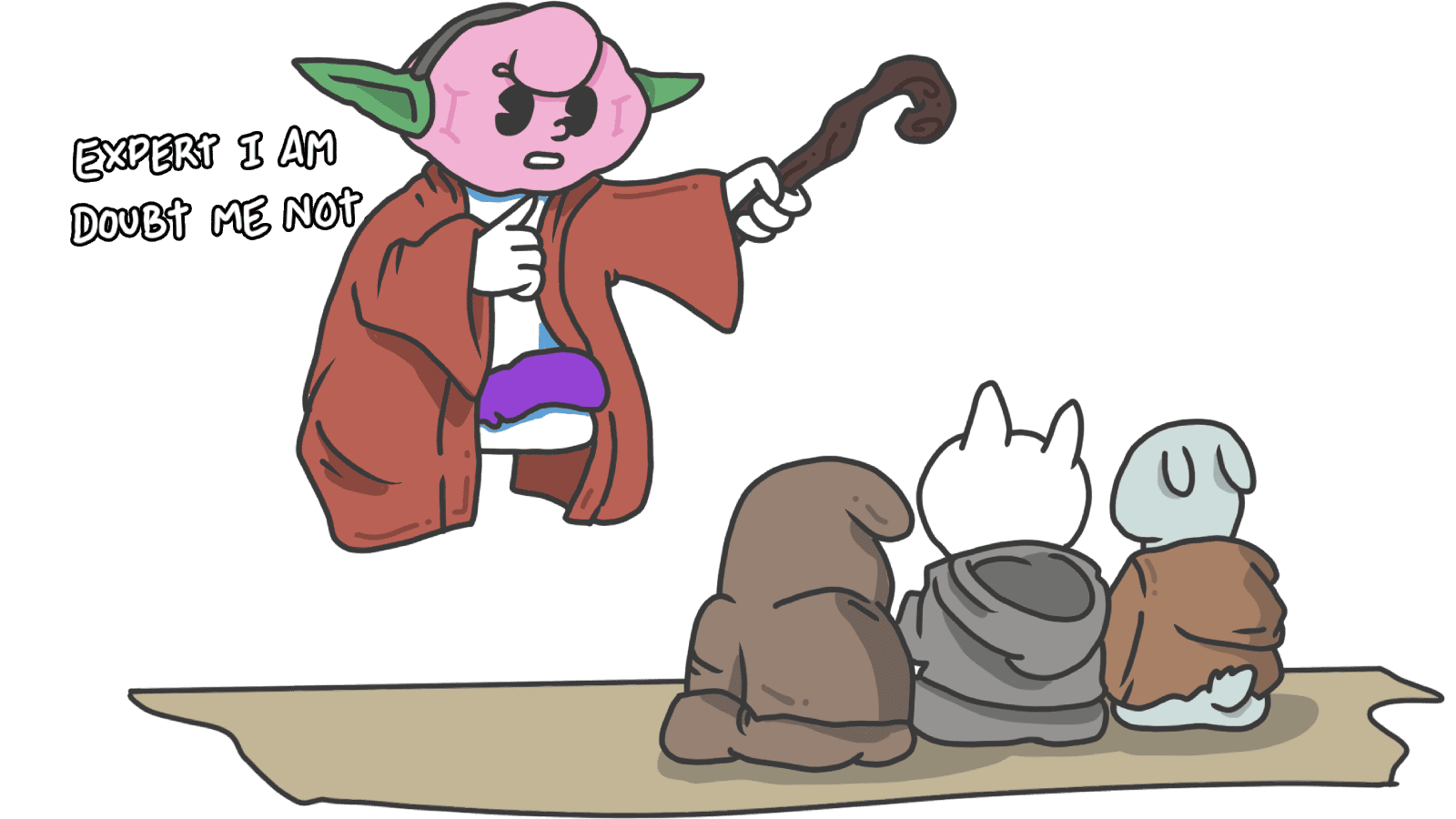
Mentioning 512k followers and best-seller status right at the top is a brilliant move. It leverages massive social proof to bypass the typical "who is this person" hurdle. By the time you reach the curriculum, you have already accepted the instructor as a legitimate expert, making the technical claims that follow much easier to digest.

Borrow trust you haven't earned yet

Cognitive bias

Borrow trust you haven't earned yet

Show your visitors that someone they already trust trusts you.

A dense offer that still reads as scannable

The page is packed with modules, bonuses, and FAQs that on a flat layout would read like a wall of text. Wrapping the curriculum and FAQ inside accordions, paired with bonus stacks broken into clean cards, lets a serious buyer skim the offer in thirty seconds and dig in only where it matters. It is a small structural choice that quietly does heavy work for conversion on a long-form sales page.

Tame long content with accordions

UX heuristic

Tame long content with accordions

Hide the noise, show what matters.

Watch outs

High risk·Cognitive Overload

The checkout form is a single, long block of inputs that asks for everything from personal ID to home addresses in one go. A visitor might land here and think, "This is too much work for right now, I will finish it later." That later usually never happens. Breaking this into smaller, manageable steps would keep the momentum going.

What we'd change

High impactHeuristic:Hick's Law

The checkout form is a conversion wall

After a beautifully persuasive journey, the visitor hits a massive form requiring extensive personal data. This creates a sudden spike in cognitive load and perceived effort. When the friction of buying exceeds the excitement of the product, you lose the sale. The current layout makes the transaction feel like a chore rather than a victory.

High impactHeuristic:Social Proof

No student testimonials anywhere on the page

The page leans entirely on the instructor's personal authority, 512k followers, best-seller status, premium photography. What it never shows is a single past student. No quotes, no faces, no before-and-after stories, no video reactions. For a course that teaches how to influence people, the absence of peer proof is the loudest gap on the page. Visitors can see Rian's success, but they cannot see themselves in someone like them who took the leap and won.

Medium impactHeuristic:Miller's Law

Your instructor bio is a wall of text

The bio section is dense and difficult to scan. Most visitors are pattern-matchers who will skip large blocks of text. By burying key credentials in a long paragraph, you risk users missing the very facts that prove your expertise. It is a classic case of information density working against the user.

Medium impactHeuristic:Zero Risk Bias

The final CTA lacks a safety net

There is no prominent mention of a money-back guarantee near the checkout button. Even with a high-trust brand, the final click is where purchase anxiety peaks. Without an explicit zero risk signal, the visitor's default behavior is to protect their wallet and close the tab.

PolishHeuristic:Framing Effect

The CTA copy focuses on the cost

Comprar is a transactional word that reminds people they are losing money. It triggers a small moment of pain. To maximize conversion, the button should reflect the transformation the user is seeking. You want them to think about the mastery they are gaining, not the balance they are losing.

What the copy is doing

The copy on this page is authoritative and deeply aligned with the professional aspirations of its audience. It avoids generic marketing fluff and instead uses specific terms like UX and Design to signal that this is a high-level training. The Secret Languages framing is particularly effective, turning a standard educational product into an exclusive advantage that the reader feels they need to possess.

the primary CTA

Today

COMPRAR COM 35% OFF

Suggested rewrite

QUERO DOMINAR A PSICOLOGIA DO CONSUMO

the instructor bio

Today

Rian Dutra é o criador deste treinamento inédito e um dos nomes mais respeitados do Brasil...

Suggested rewrite

• Autor do best-seller 'Enviados' • +512k seguidores • Especialista em Psicologia Aplicada

If we owned Curso Rian Dutra (designfromhuman)

This would be our first change.

We would ship a student testimonials section right above the checkout.

The whole page rides on Rian's personal authority, but buyers want to see people like themselves who already took the course and got results. Even three short student quotes with photos, and ideally a couple of 30-second video reactions, placed just before the form would convert hesitant fans into confident students faster than any other change. It is the highest-leverage gap on a page that is otherwise close to perfect.

Reviewed by UX Scan against 80+ conversion and usability heuristics from a real scan of https://angulor.com/linguagemsecreta/.